Herd work
Cut one cow out of the herd and keep it from getting back, the way a cutting horse does.

A beginner's guide
Three phases, one horse, and a cow that has opinions. Here's how it works and where you'd start.
Reined cow horse comes from the Californian vaquero tradition of a ranch horse that can do it all: sort a cow out of the herd, answer the lightest touch of the reins, and take control of a cow out in the open. A run tests all three, and the best horses make it look like a conversation.
Every run starts at a score of 70, and each manoeuvre adds or takes away from it. Judges reward a horse that is quiet, willing and in charge of its cow.
A cow horse run tests a ranch horse's whole job, one phase at a time.
Cut one cow out of the herd and keep it from getting back, the way a cutting horse does.
A reining pattern with no cow: circles, flying lead changes, spins and sliding stops.
Box a fresh cow at the end of the arena, run it down the fence, turn it both ways, then circle it.
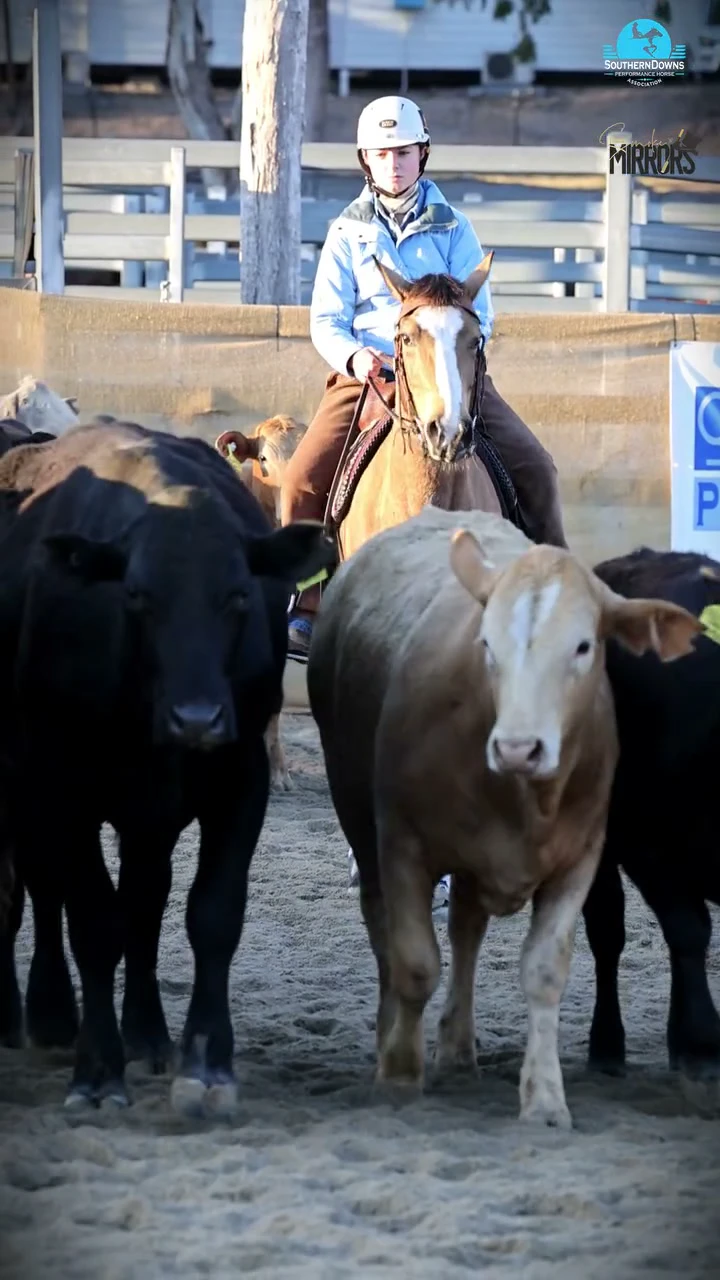
Herd work: cut one cow out of the herd and stop it getting back
📷 Winning Edge Media
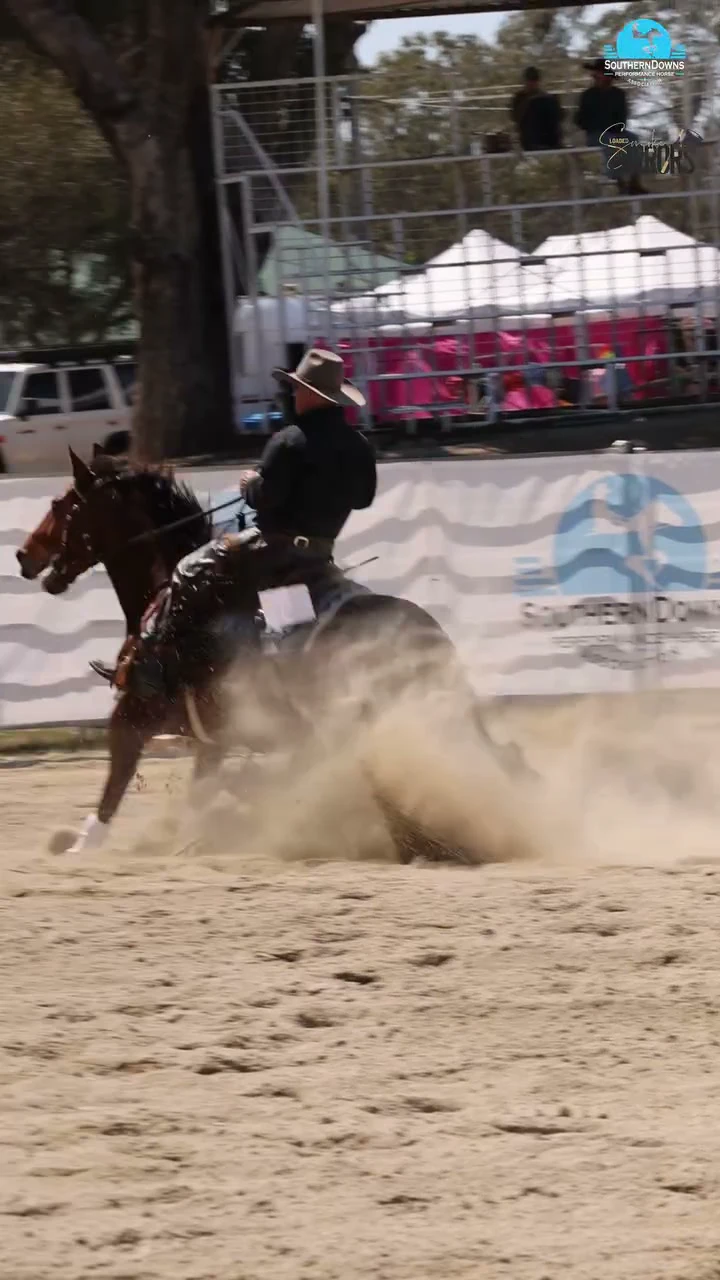
Rein work: a pattern of circles, lead changes, spins and sliding stops, no cow
📷 Winning Edge Media
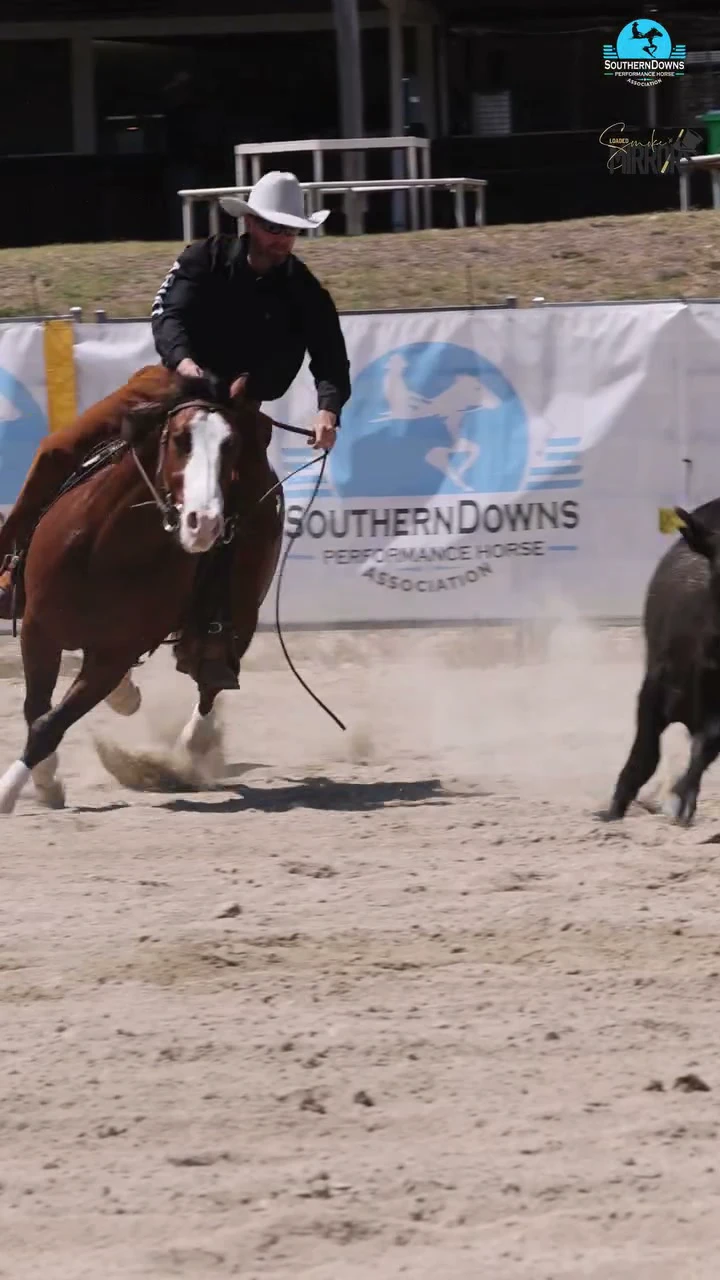
Fence work: box the cow, run it down the fence, turn it both ways, then circle it
📷 Winning Edge Media
Come to Tin Town or the Spectacular and watch a few runs with the score sheet in mind.
Club training days teach stopping, backing and turning on a cow that never gets tired.
A short rein pattern, then hold one cow at the end of the arena. No fence work yet.
When you and your horse are ready, the whole run is waiting.
The usual first class. You ride a rein work pattern, then hold a single cow at one end of the arena for a set time. There's no fence work, so you and your horse can learn to read a cow without going flat out.
Classes where any horse three and over is ridden with two hands, in a snaffle bit or a hackamore. They let you compete without worrying about the age and bridle rules of the traditional classes, which makes them popular with newcomers and with horses changing careers.
Open is for anyone. Non Pro is for riders who aren't paid to ride or train other people's horses. Rookie and Level 1 classes are for riders with only small lifetime earnings, and Youth classes are for juniors and seniors under 18, who can ride a borrowed horse and must wear a helmet. ARCHA's rule book sets the limits each year.
Age-limited events for young horses over all three phases. The Futurity is for the youngest horses in the snaffle bit, and the Derby is for the next age group up. Check ARCHA's current rules for the exact ages.
No. Plenty of stock horses, quarter horses and all-rounders have a go in boxing and the two-handed classes. A quiet horse that will go towards a cow is a great start.
SDPHA is an ARCHA affiliate, and ARCHA-approved classes have ARCHA's membership rules. Ask us before your first show and we'll point you the right way.
The best way in is through the club. Join, come to a members day, and ask all the questions.
Join SDPHA